

Loose teeth from gum disease are one of the most serious warning signs of underlying periodontal damage. If left untreated, it can lead to progressive bone loss and eventual tooth loss. This article will help you understand the causes, stages of progression, and effective treatment solutions to preserve your natural teeth.
Why Periodontal Disease Leads to Loose Teeth
Periodontal disease, or periodontitis, is a silent and progressive infection. It doesn’t happen overnight; rather, it is the result of long-term bacterial accumulation that eventually overwhelms the body’s natural defenses.
The Destruction of Periodontal Ligaments and Alveolar Bone
A tooth is not simply stuck into the jaw like a nail in wood. Instead, it is suspended in a specialized socket by a network of thousands of microscopic fibers called periodontal ligaments (PDL). These ligaments act like tiny bungee cords or shock absorbers, allowing the tooth to withstand the immense pressure of chewing while remaining firmly attached to the surrounding bone.
When dental plaque, a sticky biofilm of bacteria, is allowed to remain near the gum line, it eventually hardens into tartar (calculus). This tartar provides a porous surface for more aggressive bacteria to thrive. As the body’s immune system attempts to fight these bacteria, it releases enzymes that, unfortunately not only kill the bacteria but also begin to dissolve the very ligaments and bone meant to support the tooth.
As the alveolar bone (the part of the jaw that holds the tooth sockets) loses its density and volume, the tooth loses its anchor. Without a solid “socket” to sit in, the tooth begins to shift and move under the slightest pressure.
Periodontal disease is a gum infection that damages the tissues supporting teeth
The Impact of Deep Periodontal Pockets
As the infection progresses, the attachment between the tooth and the gum tissue begins to break down. This creates a space known as a “periodontal pocket.” In a healthy mouth, these pockets are only 1 to 3 millimeters deep. In advanced gum disease, these pockets can reach 5, 7, or even 10 millimeters in depth.
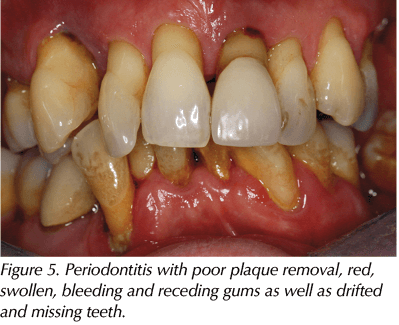
These deep pockets are essentially toxic trenches. Because they are deep and oxygen-deprived, they harbor anaerobic bacteria that are highly destructive. These bacteria produce acids and toxins that further push the gums away from the tooth, a process often described as gum recession, exposing tooth root.
Once the root is exposed and the pocket is deep, the tooth is essentially sitting in a pool of infection rather than a firm grip of tissue. The loss of this “soft tissue seal” combined with bone loss is the primary reason teeth feel lỏng lẻo or “loose” within the socket.
Stages of Progression from Gingivitis to Loose Teeth
Understanding the timeline of gum disease is crucial for patients to self-identify their condition and realize the urgency of professional intervention. Periodontitis is often referred to as a “silent” disease because it rarely causes significant pain until it reaches the final, most dangerous stages.
Gingivitis: The Warning Phase
This is the only reversible stage of gum disease. At this point, the infection is limited to the surface of the gums. You may notice your gums are red, puffy, or bleed slightly when you brush or floss. Crucially, in this stage, the teeth remain perfectly stable because the underlying bone and ligaments have not yet been attacked. If you act now, you can stop the progression entirely.
Gingivitis is an early gum inflammation that is still reversible
Slight to Moderate Periodontitis: The Eroding Foundation
As the infection moves beneath the gum line, it begins to destroy the supporting structures. You might notice your teeth look “longer” as the gums pull back. Persistent bad breath (halitosis) becomes common as bacteria hide in deepening pockets. At the moderate stage, you may start to feel a “strange” sensation when you bite down—a slight shift or a feeling that your teeth don’t fit together the way they used to. This is the first sign that the foundation is beginning to fail.
Advanced Periodontitis: The Terminal Stage
This is where significant bone loss and ligament destruction have occurred. The teeth are now visibly loose and may shift position when you speak or eat. The distance between teeth may increase, creating new gaps. At this stage, the risk of the tooth falling out on its own is extremely high, and the infection may have spread to the point where an abscess (a pocket of pus) forms near the root, causing throbbing pain and swelling.
Advanced periodontitis is a severe gum disease stage that causes bone loss and loose teeth
Can Loose Teeth from Gum Disease Be Saved?
Can Loose Teeth from Gum Disease Be Saved? The answer is a resounding YES, provided you seek treatment before the “point of no return.” Many patients assume that once a tooth wiggles, it is “dead” and must be pulled. This is a myth. The tooth itself is often perfectly healthy; it is the support system that is failing.
If the bone loss hasn’t exceeded a critical threshold (typically around 60-70%), and the infection can be brought under control, the body has a remarkable ability to heal. Through specialized treatments, we can eliminate the bacteria, reduce the depth of the pockets, and in some cases, even stimulate the regrowth of bone.
The goal of modern periodontics is “biological preservation”, keeping your natural teeth whenever possible. However, the window of opportunity is small. The longer you wait, the more bone is lost, and the harder it becomes for a dentist to “anchor” the tooth back into place.
Loose teeth from gum disease can often be saved if treated early before significant bone loss occurs
Advanced Treatment Options for Loose Teeth
Saving a loose tooth requires more than just a regular cleaning. It requires a comprehensive approach to “decontaminate” the mouth and stabilize the tooth. Here are the leading receding gums treatment options and stabilization techniques used by experts.
Scaling and Root Planing (Deep Cleaning)
This is the foundational treatment for gum disease. Unlike a standard cleaning that only polishes the part of the tooth you see, scaling and root planing involve going deep beneath the gum line to scrape away tartar and infected tissue. The “root planing” part involves smoothing out the rough surfaces of the tooth root. By making the root smooth, the bacteria have no place to hide, and the gum tissue has a better chance of “re-attaching” to the tooth, effectively shrinking the periodontal pockets.
Tooth Splinting (Splinting)
When a tooth is loose, the very act of chewing or speaking can prevent it from healing because the constant movement irritates the tissues. To solve this, dentists use a technique called splinting.
Using a thin, flexible wire or a specialized resin, the loose tooth is “bonded” to the stable, healthy teeth next to it. Think of it like a cast for a broken leg; it holds the tooth perfectly still so that the ligaments and bone can reform and strengthen around the root without being disturbed by daily mechanical pressure.
However, it’s important to note that splinting is primarily effective for cases of tooth mobility caused by trauma or sudden impact, and is not typically indicated for loose teeth resulting from advanced gum disease.
Splinting is a dental procedure that stabilizes loose teeth by bonding them to nearby healthy teeth
Bone Grafting and Tissue Regeneration
For patients with significant bone loss, we can perform a surgical graft. By placing bone material (either synthetic or your own) into the areas where the jaw has thinned, we provide a “scaffold” for your body to grow new, healthy bone. Over several months, this new bone integrates with your jaw, providing a fresh, solid foundation to hold the tooth in place. This is often combined with “Guided Tissue Regeneration,” using a special membrane to prevent the gums from growing into the bone space, allowing the slower-growing bone to regenerate successfully.
Antibiotics and Localized Antimicrobial Therapy
To ensure the infection is completely eradicated, dentists may use localized antibiotics. These are often in the form of tiny microspheres or gels placed directly into the periodontal pockets. They release medication slowly over several days, killing the deep-seated bacteria that mechanical tools might miss. This chemical “reset” of the oral microbiome is essential for preventing the infection from returning.
Localized antibiotics help eliminate deep gum bacteria and reduce infection in periodontal pockets
Home Care for Supporting Loose Tooth Recovery
- Extreme Gentle Hygiene: Continue to brush twice a day, but use an ultra-soft-bristle brush. Do not “scrub” the loose tooth; instead, use gentle circular motions.
- Interdental Cleaning: Use a water flosser on a low setting or specialized interdental brushes. Avoid “sawing” traditional floss against a loose tooth, as the upward pressure can further loosen the root.
- Saltwater Rinses: Rinse your mouth with warm salt water 2-3 times a day. This helps reduce gum inflammation and creates an environment where bacteria struggle to survive.
- The Soft Diet: Avoid all hard, crunchy, or sticky foods (like nuts, crusty bread, or gummy candy). Stick to a diet of soft foods like yogurt, mashed potatoes, and smoothies to minimize the mechanical load on your healing teeth.
- Eliminate Acids: Stop consuming sodas and citrus juices for a few weeks. The acid can irritate inflamed gums and interfere with the chemical “re-sealing” of the gum tissue to the tooth.
Home care is essential for supporting healing and protecting loose teeth during gum disease treatment
When is Extraction Necessary?
Despite our best efforts, there are times when a tooth simply cannot be saved. In these cases, the most responsible solution is to extract the tooth to protect the remaining bone and the health of the adjacent teeth. In the world of clinical dentistry, we usually reach this conclusion when:
- Bone loss exceeds 70%: If there is less than 30% of the bone left to hold the tooth, the “leverage” of the tooth is too great, and it will eventually fail regardless of treatment.
- The presence of a massive, chronic abscess: If a large pocket of infection has destroyed the tip of the root and the surrounding bone, the tooth becomes a source of systemic danger to your heart and lungs.
- Horizontal fractures: If the root itself has cracked or broken under the stress of moving, it cannot be repaired.
Tooth extraction is necessary when severe damage, infection, or fractures make the tooth impossible to save
FAQ – Frequently Asked Questions
How long does it take for a loose tooth to fall out if left untreated?
There is no exact timeline, as the speed of gum disease varies from person to person. However, once a tooth is visibly moving, the bone loss is already advanced. Without intervention, a loose tooth can fall out within a few months, or it might linger for a year in a state of chronic infection. The danger is that while it lingers, it is actively destroying the bone of the neighboring teeth, potentially leading to multiple tooth losses.
Should I try to wiggle the tooth with my finger to see if it’s getting better?
Absolutely not. This is one of the most damaging things you can do. Every time you wiggle the tooth, you are tearing the fragile new ligament fibers that are trying to heal. Think of it like picking a scab; you are resetting the healing clock every time you touch it. Leave the tooth alone and let the dentist perform the evaluation.
What is the cost of treating a loose tooth from gum disease?
The cost is highly variable. A simple deep cleaning and splinting might cost a few hundred dollars, whereas a complex case requiring bone grafting and surgery can cost several thousand. However, it is important to remember that the cost of replacing a lost tooth with an implant and crown is significantly higher than the cost of saving the one you already have. Early treatment is always the most economical choice.
A loose tooth is a warning sign of serious periodontal damage that should not be ignored. With timely treatment, many cases can still be stabilized and saved using modern dental solutions. Early intervention is key to preventing further bone loss and tooth loss. At Alisa Dental, we provide advanced diagnostics and personalized care to help protect your natural smile.
Contact Information:
- 33 Nguyen Phong Sac, Cau Giay, Hanoi
- Hotline: 0921 617 555
- Email: international@alisadental.com
- Working hours: 8:30 AM – 7:00 PM